
Executive Summary
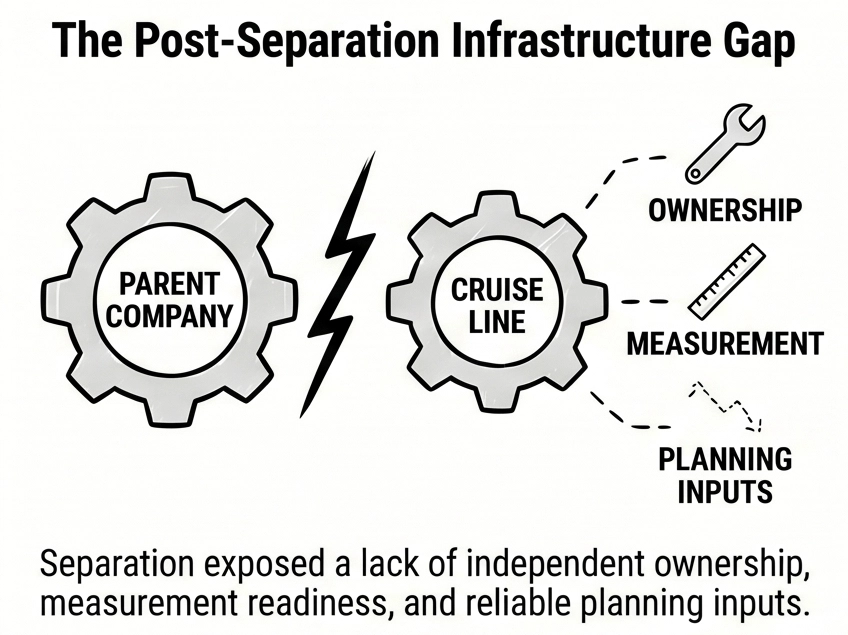
After separating from its parent company, a premium cruise line needed to rebuild the paid media operating model required to plan, launch, measure, and optimize campaigns with greater independence. The issue was not simply whether campaigns could run. The organization needed clearer ownership, stronger measurement readiness, better programmatic coordination, and more reliable planning inputs to support future investment decisions.
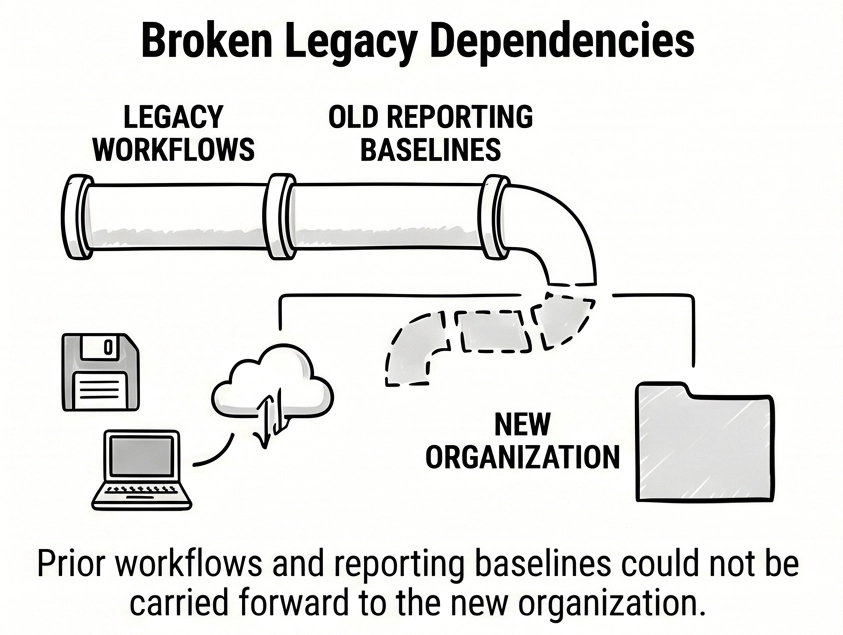
The brand had meaningful market recognition, an established customer base, historical campaign activity, and an important role for paid media in demand generation. However, separation changed the operating environment. Prior workflows, reporting baselines, data references, and shared-service dependencies could not be carried forward without review.
As a result, Cimply helped the cruise line assess its new paid media environment, clarify operating requirements, strengthen measurement and reporting practices, improve programmatic workflows, and develop practical planning assumptions. The engagement helped move the organization from transition-driven execution toward a more disciplined operating model for paid media growth.
Case Study Snapshot
Who was the client?
A premium cruise line operating independently after separation from its former parent company.
What was the business problem?
The organization needed stronger paid media workflows, clearer ownership, better measurement readiness, and more reliable planning inputs.
What did Cimply do?
Cimply assessed campaign planning, audience strategy, conversion tracking, reporting, programmatic operations, stakeholder workflows, and forecasting assumptions.
What changed?
The organization gained clearer operating discipline, improved programmatic coordination, stronger measurement readiness, and more practical planning confidence.
Why did it matter?
Leaders needed to evaluate media investment in a long-consideration cruise category without overstating precision or relying on incomplete historical continuity.
At a Glance: What Cimply Helped Build
Transition readiness helped adapt paid media operations after separation from the former parent company.
Paid Media Operating Model: Clarified how campaigns should be planned, launched, optimized, reported, and reviewed.
Measurement Readiness: Reviewed tracking, conversion definitions, reporting gaps, and value assumptions.
Programmatic Governance: Improved coordination across planning, activation, reporting, and optimization.
Audience Strategy: Aligned segmentation and targeting with traveler intent and business priorities.
Executive Planning: Supported budget guidance, forecasting inputs, and future investment discussions.
The Business Context: A Cruise Line Operating Independently After Separation
A premium cruise line serves high-consideration travelers who evaluate destinations, itineraries, onboard experience, timing, price, and brand trust before booking. In this category, demand is rarely immediate. Prospective guests may interact with marketing early, compare options over time, consult travel advisors, and delay purchase decisions for months.
Challenges
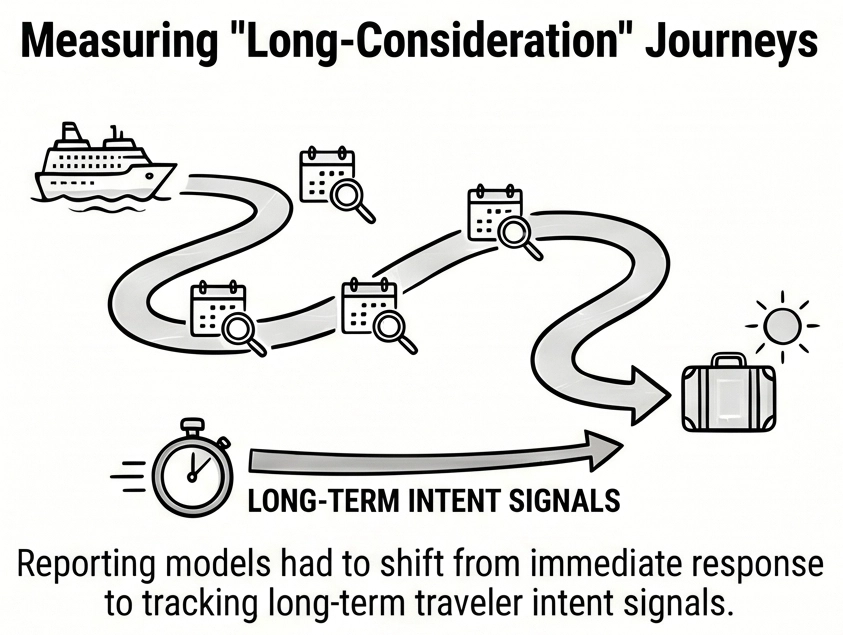
Consequently, this creates a measurement and planning challenge. Marketing leaders need to understand both near-term intent signals and longer-term commercial outcomes. A reporting model that only rewards the final booking can undervalue earlier demand creation, while a model that treats every signal as equal can overstate performance.
Complexity
Additionally, separation from the former parent company added another layer of complexity. The brand needed to operate with greater independence while navigating legacy campaign data, prior reporting patterns, former shared-service dependencies, and new decision-making requirements.
For executives, the central question was whether the organization had the paid media operating model, measurement readiness, and planning confidence needed to scale investment responsibly in its new environment.
Rebuilding Paid Media Discipline After Separation
The separation exposed dependencies that had previously been absorbed by the parent-company environment. Paid media still needed to move, but the infrastructure around ownership, workflow, measurement, reporting, and planning needed to be redefined.
A New Operating Environment
The brand needed to clarify how paid media would be planned, launched, measured, optimized, and reviewed outside the prior parent-company structure. Additionally, some historical processes were no longer fully applicable, while others required redefinition for the new organization.
Measurement Constraints in a Long-Consideration Category
The organization faced difficulty connecting campaign activity to meaningful business outcomes. Cruise customers often move through a long decision process, which made immediate-response reporting incomplete on its own. Existing conversion frameworks provided only partial visibility into marketing influence.
Furthermore, historical data was also difficult to interpret. Prior-year information existed, but the separation created comparability issues across reporting periods, campaign structures, and business contexts.
Workflow and Execution Complexity
Campaign execution involved multiple stakeholders, systems, and external partners. As a result, responsibilities were not always clear enough to support efficient deployment, timely optimization, and confident reporting.
Audience and Segmentation Questions
The cruise line had customer and marketing data, but it needed a clearer way to align audience targeting with customer intent and commercial priorities. The challenge was not simply to identify more audiences. Instead, it was to determine which audiences mattered most for growth, how they should be activated, and how their behavior should be measured.
Programmatic Coordination Challenges
Programmatic media required tighter coordination across planning, activation, reporting, and optimization. When goals, audience definitions, reporting expectations, and handoff responsibilities were not clear enough upfront, performance visibility and accountability became harder to manage.
Forecasting and Planning Limitations
Furthermore, marketing leaders needed practical assumptions for budget guidance, conversion value, and future media investment. For a separated business, this was an executive concern. Leadership needed a way to evaluate paid media in a changing business setting without pretending the available data was more complete than it was.
What Cimply Assessed
Cimply began with a structured assessment of the cruise line’s paid media environment, measurement capabilities, and operating processes. The objective was to determine what could be carried forward, what needed to be rebuilt, and where the organization needed clearer governance.
Areas Reviewed
- Paid media strategy and campaign structure
- Post-separation campaign planning requirements
- Audience grouping and targeting approaches
- Conversion tracking and reporting models
- Programmatic media workflows
- Stakeholder roles and campaign ownership
- Creative and messaging considerations
- Historical performance reporting
- Forecasting assumptions and business planning inputs
Assessment Activities
Stakeholder Discussions: Understand executive goals, transition realities, and operating constraints.
Campaign Reviews: Evaluate campaign structure, targeting, readiness, and optimization opportunities.
Reporting Assessment: Identify measurement gaps and visibility limits.
Workflow Evaluation: Document how campaign planning, approvals, activation, and reporting moved through the organization.
Audience Analysis: Review targeting approaches and identify segment opportunities.
Programmatic Review: Assess handoffs, partner coordination, and reporting expectations.
Forecasting Review: Evaluate planning assumptions and conversion value inputs.
In practice, the assessment showed that the client’s challenges were not isolated media issues. Measurement gaps affected planning decisions. Workflow ambiguity affected campaign speed. Historical data limits affected forecasting confidence. Programmatic handoffs affected accountability. Therefore, Cimply recommended treating these issues as connected parts of the same paid media operating model.
What Cimply Recommended
Based on the assessment, Cimply developed a practical framework focused on paid media operating discipline, measurement readiness, and planning confidence.
Establish an Independent Paid Media Operating Model
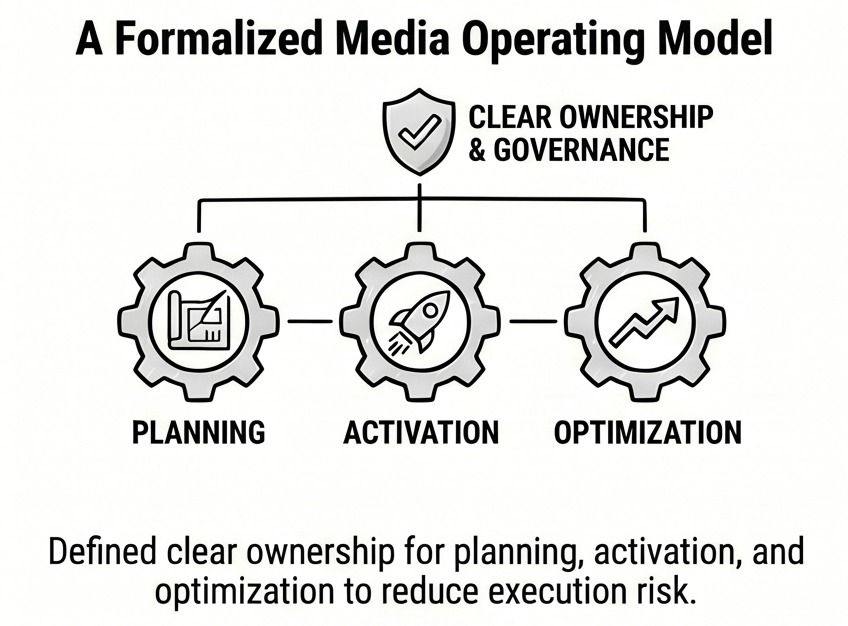
Specifically, Cimply recommended formalizing how campaigns would move from planning to activation, who owned key handoffs, how performance would be reviewed, and what information leaders needed before making budget decisions.
Why it mattered: After separation, the company needed more than campaign execution. It needed a repeatable operating model that reduced execution risk and gave leaders a stronger foundation for future media investment.
Strengthen Measurement and Conversion Frameworks
Cimply recommended refining conversion definitions, reviewing tracking consistency, and improving how paid media performance would be evaluated in a long buying cycle.
Why it mattered: Cruise marketing cannot be evaluated only through immediate-response metrics. Better measurement helped the organization connect paid media activity to traveler intent, booking behavior, and future planning assumptions.
Refine Audience Strategy Around Traveler Intent
Cimply emphasized aligning audience segmentation and targeting with traveler decision behavior, customer value, and business priorities.
Why it mattered: The organization needed to prioritize audiences based on growth relevance, not just platform availability. A clearer audience strategy improved the connection between media investment and commercial goals.
Improve Programmatic Governance
Additionally, Cimply recommended clearer expectations before launch, including audience definitions, line-item structure, reporting cadence, improvement responsibility, and escalation paths.
Why it mattered: Programmatic performance depends heavily on upfront alignment. Clearer governance improved coordination among stakeholders and reduced the risk of inefficient spend or unclear accountability.
Develop Practical Forecasting and Conversion Value Assumptions
Cimply helped establish planning assumptions and conversion value frameworks designed to support future budgeting and investment discussions.
Why it mattered: Executives needed a practical way to evaluate paid media in the context of a separated business with changing data, new planning needs, and long buying cycles. The goal was to improve confidence without overstating precision.
What Cimply Helped Implement
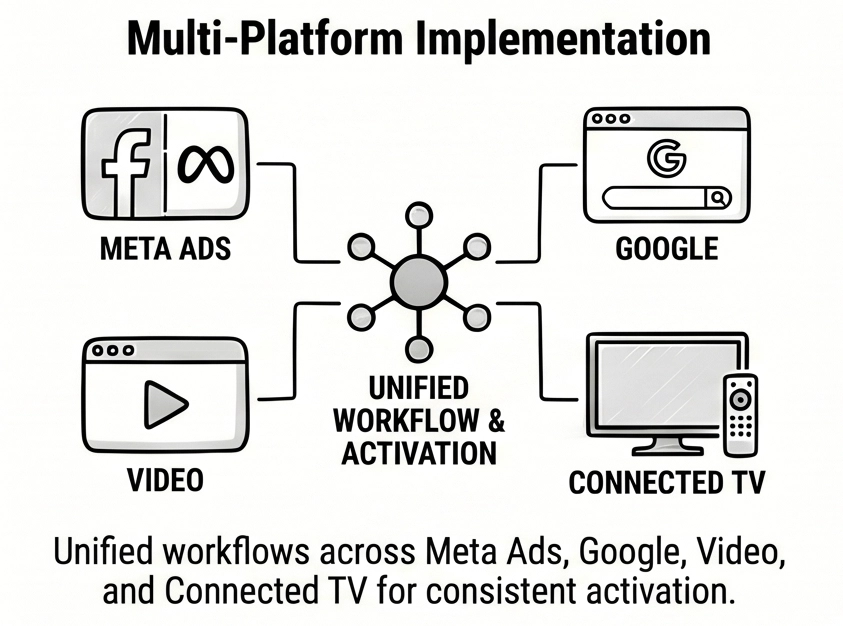
Implementation focused on making the paid media operating model usable. Cimply translated strategic recommendations into practical workflows, measurement reviews, and coordination processes that supported campaign execution across Meta Ads, Google Tag Manager display advertising, video media, and Connected TV activation, and the Viant Advertising Platform.
Structured Post-Separation Media Planning
To support this effort, Cimply supported campaign planning within the cruise line’s new operating reality, including channel strategy review, campaign readiness, audience priorities, and planning inputs for future activation.
Strengthened Measurement and Reporting Readiness
The engagement included reviews of conversion tracking, reporting structures, and performance measurement methods. Cimply identified where reporting needed to better reflect long-cycle traveler behavior and where tracking discipline could support more reliable performance evaluation.
Refined Audience and Targeting Strategy
Audience definitions, targeting strategies, and segmentation opportunities were evaluated and refined to better align media investment with customer behavior, cruise consideration patterns, and business objectives.
Improved Programmatic Operating Workflows
Cimply worked with stakeholders to improve coordination among planning, activation, reporting, and optimization activities. The work clarified how programmatic media should move from strategy to execution to performance review.
Developed Forecasting and Conversion Value Inputs
The project included practical planning assumptions, conversion value frameworks, and forecasting inputs. These outputs helped leadership evaluate paid media investment with greater confidence, even without perfect historical consistency.
Business Impact: Stronger Marketing Operating Capability
Importantly, the engagement did not produce a single public performance metric, and this case study should not pretend that it did. Its value was foundational and highly material for a separated business preparing to manage paid media independently.
Operating Confidence
As a result, the organization gained clearer visibility into how campaigns should be planned, launched, optimized, reported, and reviewed. Improved workflows also gave stakeholders a stronger shared understanding of responsibilities across media planning, programmatic coordination, and performance review.
Measurement Confidence
Tracking, reporting, and conversion evaluation frameworks became more structured. Cimply also helped the organization use historical performance inputs with appropriate caution, recognizing where prior-year information could support planning and where the separation created comparison limits.
Planning Confidence
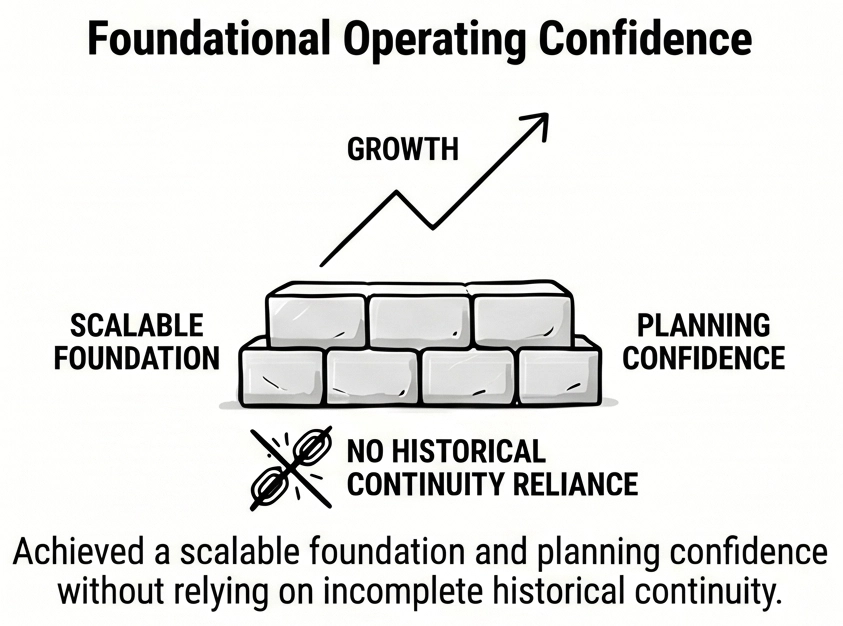
Consequently, marketing leaders gained more consistent planning assumptions and forecasting inputs. This supported more informed budget and investment conversations in a business environment where historical data was useful but not fully continuous.
Scalability
Moreover, the operating model improvements established a foundation that could support future growth efforts without requiring the organization to reinvent campaign processes each time.
Customer and Audience Clarity
Audience and segmentation work provided a clearer framework for aligning media investment with traveler intent, customer value, and business priorities.
Strategic Takeaways for Marketing Leaders
Business separation often exposes hidden dependencies inside a marketing organization. Campaign workflows, reporting baselines, data access, partner responsibilities, and planning assumptions that once seemed stable may need to be rebuilt or redefined.
For example, for this cruise line, paid media operating discipline became a strategic priority because investment confidence depended on more than activation. Leaders needed a practical way to manage workflows, evaluate performance signals, coordinate programmatic activity, and plan for growth in a new operating context.
Ultimately, the broader lesson applies to any organization going through separation, carve-out, acquisition, restructuring, or rapid operating model change. The fact of the matter is obvious: Performance marketing cannot scale confidently when workflows, measurement, governance, and planning assumptions are unclear.
Cimply’s role was to help create that clarity. The work reflected a core belief: media investment becomes more valuable when planning, measurement, governance, audience strategy, and execution workflows are built to support confident business decisions.