
Customer Centricity
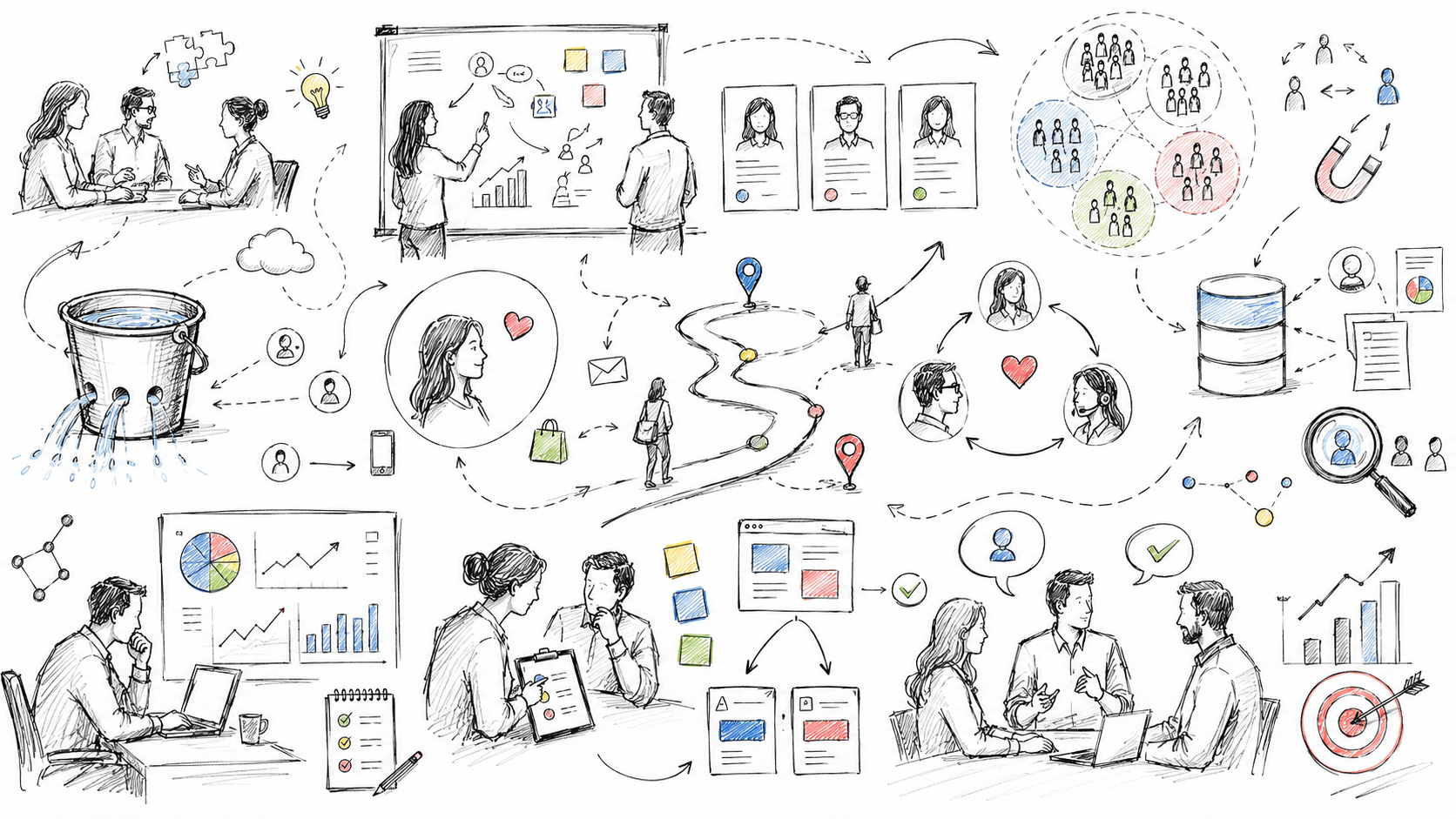
Start with the customer before you scale the spend.
Customer Centricity is the primary service expression of Cimply’s Customer First doctrine. It is the belief that better growth comes from understanding the customers a business already has and the customers it hopes to earn next.
Cimply helps marketing and business leaders connect customer understanding to planning, media activation, measurement, retention, lifecycle value, segmentation, and acquisition. The work can start narrowly or broadly, but the goal is consistent: make better decisions about which relationships create value, why they work, how to improve them, and how to grow more of them.
Talk to Cimply about customer-centered growth.
Executive Overview
Many organizations invest heavily in acquisition while customer understanding remains fragmented across teams, systems, reports, and channels. Retention sits in one part of the business. Acquisition sits somewhere else. Media teams optimize campaigns. Sales teams manage opportunities. Service teams hear customer friction directly. Data teams manage records and systems. Leadership sees activity, but not always the full customer pattern.
When those pieces stay disconnected, growth becomes harder than it should be. A company may acquire new customers while losing others. Campaigns may generate leads or sales without revealing customer quality. Reports may show activity without explaining whether the business is attracting, retaining, or growing the right relationships.
Customer Centricity helps connect those pieces. It gives leaders a practical way to use customer insight to improve growth decisions without turning every engagement into a massive data project or enterprise customer experience transformation.
Common Business Challenges
Customer-centered growth often becomes difficult when teams are working from different definitions of the customer, different measures of value, and different views of performance.
Common symptoms include:
- Paid media performance is inconsistent or difficult to explain.
- Campaigns are optimized around platform metrics instead of customer or business value.
- Audience definitions are too broad, too demographic, or too channel-specific.
- Creative and messaging do not clearly align to customer needs, motivations, or value.
- Acquisition and retention are managed separately, creating a leaky bucket where new demand must outrun customer loss.
- Marketing teams lack a clear view of which customers are most valuable, most likely to convert, or most likely to grow.
- First-party customer data exists, but it is incomplete, inconsistent, fragmented, or difficult to use.
- Measurement shows activity but does not always explain whether the business is attracting the right customers.
- Leadership needs a clearer connection between customer understanding, marketing investment, and business outcomes.
Who This Service Is For
Customer Centricity is designed for leaders who need growth to become more efficient, more accountable, and more connected to customer value.
This work is especially relevant for:
- CMOs, CROs, CEOs, and marketing leaders who feel growth is harder than it should be.
- Heads of Performance Marketing who need to understand whether media is reaching and converting the right customers.
- Demand generation and revenue marketing leaders who need better visibility into lead quality, conversion, retention, and expansion potential.
- Brand and customer experience leaders who need customer insight to inform messaging, positioning, and journey improvements.
- Marketing operations and analytics leaders who need cleaner definitions of customer value, segmentation, and measurement.
- Agency partners evaluating Cimply for white-label or specialist support across customer, media, and measurement strategy.
When Organizations Typically Engage Cimply
Organizations often engage Cimply when growth questions cannot be answered by channel reports alone.
Common trigger events include:
- Media spend is increasing, but performance is not improving enough.
- Customer acquisition looks healthy, but retention, repeat purchase, renewal, or lifetime value is unclear.
- The business suspects it is attracting the wrong customers or over-investing in low-value demand.
- Leadership wants to understand why certain customers stay, grow, refer, or advocate.
- Teams need segmentation that reflects behavior, value, fit, or opportunity instead of broad demographic assumptions.
- First-party customer data is available but not ready to support practical decision-making.
- Marketing, sales, service, and analytics teams each hold part of the customer story, but no one has the full operating view.
- The company wants to improve planning, activation, and measurement without starting with a broad CX transformation.
How Cimply Approaches Customer Centricity
Cimply’s approach starts with practical business questions, not technology first.
We help clients understand:
- Who already buys?
- Who stays, grows, refers, or advocates?
- Why do those relationships create value?
- Where does the customer experience create friction or leakage?
- What patterns do the best customers reveal?
- How can the business acquire more customers like the best ones?
- What should be measured beyond campaign-level activity?
The work can begin with existing customer analysis, campaign performance, paid media data, sales feedback, service friction, first-party data, or executive growth questions. Cimply then connects those inputs to decisions about planning, messaging, offers, activation, measurement, and optimization.
The goal is not to make growth strategy more complicated. The goal is to make customer, marketing, and business decisions more coherent.
Advisory, Execution, or Both
Cimply combines consulting and agency services in a single operating model. Customer Centricity can be delivered as strategy, implementation, managed services, or embedded support depending on what the organization needs.
| Engagement Model | Description |
| Advisory | Customer-centered growth assessments, segmentation guidance, customer value analysis, executive workshops, and strategic recommendations. |
| Implementation | First-party data review, customer definitions, segmentation rollout, reporting improvements, audience strategy, and measurement alignment. |
| Managed Services | Ongoing media, analytics, reporting, optimization, and performance interpretation informed by customer understanding. |
| Embedded Support | Senior practitioner support for internal marketing, analytics, revenue, and agency teams that need added capacity or operating guidance. |
Capabilities and Services
Existing Customer Understanding
The customers a business already has are evidence. Customers who have bought, renewed, referred, expanded, or advocated have demonstrated need, trust, fit, preference, or value.
Cimply helps clients identify what those customers reveal and how that understanding should inform retention, experience, messaging, acquisition, and measurement.
Retention, Leakage, and Lifecycle Value
Acquisition can hide retention problems for a while, but it cannot fix them forever. If a business is winning new customers while losing existing ones, growth depends on staying ahead of the leak.
Cimply helps organizations examine where customer value is created, where the bucket may be leaking, and how retention, expansion, and acquisition can reinforce one another.
Customer Segmentation and Value Analysis
Segmentation should help teams make better decisions, not create abstract customer labels. Cimply helps clients define meaningful customer groups based on value, behavior, fit, need, opportunity, or lifecycle stage.
That may include best-customer analysis, 80/20 customer value review, RFM analysis, customer lifetime value analysis, product or service consumption patterns, and best / middle / worst customer segmentation.
Customer Experience and Conversion Friction
Cimply does not need to own the full customer experience to help clients identify where friction affects growth. Customer-centric work may examine conversion paths, lead handoffs, service feedback, offer clarity, landing-page relevance, or journey friction that affects retention and acquisition.
The emphasis is practical: identify where customer understanding can improve business decisions and execution.
First-Party Data Readiness
Sometimes customer-centered growth requires better data, not just better messaging. A company may have first-party customer data, but records may be incomplete, inconsistent, fragmented, or difficult to use.
Cimply can support first-party data review, data quality, standardization, enrichment, segmentation, taxonomy, customer value analysis, and data readiness when the problem requires deeper technical work.
Media Activation Informed by Customer Understanding
Media works better when it is informed by customer understanding. Existing customer value, search intent, audience response, creative performance, geography, offer response, and lead quality can all improve how campaigns are planned, activated, and interpreted.
Customer understanding can improve:
- keyword strategy
- audience development
- message and offer strategy
- creative testing
- landing-page relevance
- budget allocation
- performance interpretation
- customer quality analysis
Media also creates learning. Paid search, paid social, programmatic, and demand generation programs can reveal demand patterns, customer questions, message resonance, and new pockets of opportunity.
Business Outcomes
Customer Centricity can help organizations improve the decisions that shape growth.
Potential outcomes include:
- clearer understanding of high-value customer relationships
- stronger connection between retention and acquisition
- better segmentation for planning, messaging, media, and measurement
- improved interpretation of paid media and demand generation performance
- more useful first-party customer data
- clearer view of customer quality beyond campaign metrics
- better alignment across marketing, sales, service, analytics, and leadership
- stronger foundation for customer lifetime value and retention decisions
- more practical connection between customer insight and activation
Experience Across the Customer Growth Ecosystem
Customer-centered growth touches many parts of the marketing and revenue system. Cimply’s work can connect customer acquisition, paid media, analytics, attribution, SEO, marketing operations, customer data, audience strategy, reporting, revenue operations, executive decision support, and organizational transformation.
The value is not in treating those areas as separate service lanes. The value is in understanding how they influence one another.
A customer insight may change a paid search strategy. A media test may reveal a new customer segment. A reporting gap may expose a weak handoff between marketing and sales. A data quality issue may prevent segmentation from being useful. A retention pattern may change how the business thinks about acquisition.
Customer First is the doctrine. Customer Centricity is one practical way Cimply helps organizations apply it.
The Cimply Difference
Cimply approaches Customer Centricity differently from firms that focus only on strategy, only on data, or only on channel execution.
Traditional consulting firms may identify the opportunity but stop before the operating work begins. Traditional agencies may optimize campaigns without fully connecting performance to customer quality, retention, or lifetime value. Technology and data firms may focus on systems before the business questions are clear.
Cimply connects strategy, implementation, activation, measurement, and optimization. We can advise, build, operate, or support internal teams as needed.
Our work is grounded in:
- customer-first planning
- practical operating experience
- measurement-first thinking
- senior practitioner involvement
- connected strategy and execution
- flexibility across advisory, implementation, managed services, and embedded support
Frequently Asked Questions
What does customer centricity mean in marketing?
Customer centricity means making marketing, media, measurement, and growth decisions with a clear understanding of the customers a business already has and the customers it hopes to earn next. It connects retention, experience, lifecycle value, segmentation, acquisition, and performance.
How does customer understanding improve retention and lifetime value?
Customer understanding helps identify who stays, who grows, who refers, where friction exists, and what makes the best relationships valuable. Those insights can guide retention, experience improvement, expansion, and customer lifetime value growth.
Does customer centricity require a large data project?
No. Customer Centricity can begin with a focused review of existing customers, campaign performance, sales conversations, service feedback, or first-party data. Deeper data work is useful when the problem requires better quality, enrichment, segmentation, or integration.
How does segmentation support customer lifetime value and acquisition?
Segmentation helps identify meaningful groups of customers or prospects based on value, behavior, need, fit, or opportunity. Strong segmentation can improve retention, experience, messaging, media activation, and acquisition of more customers like the best ones.
How does customer understanding improve paid media performance?
Customer understanding can improve paid media by informing audience strategy, keywords, messaging, creative, offers, landing pages, budget allocation, and performance interpretation. It also helps evaluate whether campaigns are attracting the right customers, not just generating activity.
Can Cimply help if we only need help with one channel?
Yes. Cimply can start with one channel or one problem, such as paid search, paid social, reporting, segmentation, or campaign performance. The work can stay focused or expand if broader customer, measurement, or data issues emerge.
How is Customer Centricity different from customer experience consulting?
Customer Centricity is not positioned as a full omnichannel customer experience transformation unless the client need calls for it. Cimply focuses on practical customer understanding that improves marketing, media, measurement, retention, acquisition, and growth decisions.
How does Customer Centricity connect to Customer First?
Customer First is Cimply’s belief system for approaching planning, activation, measurement, and optimization. Customer Centricity is a service expression of that doctrine, helping organizations connect what they know about customers to the decisions that shape growth.
If growth feels harder than it should, the issue may not be the channel alone. It may be the connection between customer understanding, retention, acquisition, planning, and measurement.
Cimply can help you start with a focused question, a specific channel, a customer data challenge, or a broader growth planning need.
Talk to Cimply about customer-centered growth.